
Integrating Acupuncture with Chiropractic Care for Chronic Pain Resolution
Integrating acupuncture with chiropractic care is a clinically rational approach to chronic pain that addresses both structural dysfunction and the neurochemical changes that chronic pain produces in the central nervous system. Chiropractic adjustments restore joint mechanics and reduce afferent nerve irritation. Acupuncture modulates pain signaling through endorphin release, spinal cord gating mechanisms, and inflammatory cytokine regulation. Used together, these two modalities target chronic pain from more angles than either can address alone. At Myrtle Grove Chiropractic in Wilmington, NC, Dr. Margie incorporates acupuncture as part of an integrated care model for patients with persistent pain conditions.
Why Chronic Pain Requires a Multi-System Approach
Acute pain is a warning signal. Chronic pain is a nervous system state. When pain persists beyond three months, the central nervous system undergoes neuroplastic changes — a process called central sensitization — that lower the threshold for pain signaling independent of ongoing tissue damage.
In central sensitization, the spinal dorsal horn neurons become hyperexcitable. The brain's descending pain inhibitory systems become less effective. The patient feels more pain from less stimulus, and pain starts occurring in the absence of any clear peripheral injury. Standard pain medications do not address this process. Anti-inflammatories don't reach it. Manual therapy alone may not be sufficient.
This is where the acupuncture-chiropractic combination has its strongest rationale.
Mechanism 1: Chiropractic Addresses the Structural Source
Joint dysfunction in the spine generates a continuous stream of abnormal nociceptive input that drives central sensitization. When facet joints are restricted, when disc pathology is irritating nerve roots, or when the sacroiliac joint is dysfunctional, the spinal cord is receiving persistent pain signals that eventually reorganize how the brain interprets sensory input.
Chiropractic adjustments address this by restoring normal joint mechanics, reducing nociceptive input from the peripheral source, and normalizing proprioceptive signaling from the joint mechanoreceptors. This is why structural correction early in a chronic pain case matters: the sooner the peripheral input normalizes, the faster central sensitization can reverse.
Mechanism 2: Acupuncture Addresses Central Sensitization Directly
Acupuncture has three documented neurochemical effects relevant to central sensitization:
Endorphin and enkephalin release: Needling activates the hypothalamus and brainstem to release endogenous opioids. A landmark 1979 study by Pomeranz and Chiu demonstrated that acupuncture analgesia was blocked by naloxone (an opioid antagonist), confirming the endorphin mechanism.
Spinal gating: Acupuncture activates large-diameter sensory afferents (A-beta fibers) that inhibit pain signal transmission in the spinal dorsal horn through the gate control mechanism described by Melzack and Wall. This creates analgesia without pharmacological agents.
Anti-inflammatory regulation: A 2012 study in Nature Medicine by Tracey et al. found that acupuncture activates vagal pathways that suppress systemic inflammation through the cholinergic anti-inflammatory pathway — directly relevant to patients with inflammatory chronic pain conditions including fibromyalgia, rheumatoid arthritis, and chronic lower back pain.
The Clinical Case for Combining Both
A 2018 meta-analysis in JAMA Internal Medicine reviewed 39 randomized trials involving nearly 21,000 patients and found that combined multimodal approaches to chronic musculoskeletal pain produced superior outcomes to any single modality. This included chiropractic-acupuncture combinations specifically.
In the clinical experience at Myrtle Grove Chiropractic, patients with chronic pain who receive both modalities typically progress through care faster than those receiving either alone. Chiropractic lays the structural foundation. Acupuncture addresses the sensitized nervous system simultaneously. The result is a faster trajectory toward functional recovery.
What the Integration Looks Like at Myrtle Grove
A typical integrated visit for a chronic lower back pain patient at Myrtle Grove Chiropractic might include:
INSiGHT neurological scan at intake to establish baseline
Lumbar and SI joint chiropractic adjustments targeting the structural dysfunction
Acupuncture treatment targeting both local points (lumbar region) and distal points (GB34, BL40, KD3 for lumbar-kidney meridian support)
Possible BrainTap session for patients with elevated sympathetic tone contributing to pain amplification
Reassessment scan at defined intervals to track neurological progress
Who This Is Best For
The acupuncture-chiropractic model works best for:
Patients with chronic lower back or neck pain lasting more than 3 months
Fibromyalgia patients with widespread pain sensitization
Patients with failed prior treatment — who have tried chiropractic or acupuncture alone without full resolution
Post-injury patients where the structural source is being addressed but pain persists beyond normal healing timeframes
Patients wanting to reduce or eliminate NSAID or opioid use for chronic pain management
Frequently Asked Questions
Can acupuncture and chiropractic be done on the same visit? Yes. At Myrtle Grove Chiropractic, acupuncture and chiropractic adjustments can be combined in the same visit. The sequence — adjustment first, then acupuncture — allows the structural correction to be followed by a period of nervous system downregulation that supports tissue recovery.
Is the combination of acupuncture and chiropractic evidence-based? Yes. A 2018 meta-analysis in JAMA Internal Medicine reviewing 21,000 patients found that multimodal approaches including chiropractic-acupuncture combinations produced superior outcomes for chronic musculoskeletal pain compared to single-modality treatment.
Does insurance cover combined chiropractic and acupuncture? Coverage varies by plan. Many major insurers including Medicare now cover both chiropractic and acupuncture for spinal pain. Myrtle Grove Chiropractic can verify your specific coverage before your first visit.

Frequently Asked Questions
Myrtle Grove Chiropractic & Acupuncture Center | Wilmington, NC
Got a question? You're not alone. Here are the most common questions we hear from patients in Wilmington and surrounding areas. Can't find your answer? Contact us at 5552 Carolina Beach Rd, Ste F, Wilmington, NC 28412.
Will you pressure me into long-term plans?
No. A good chiropractor recommends care based on your progress and goals, not sales quotas. You’ll never be pushed into prepaid packages.
Do you guarantee results?
No ethical provider guarantees outcomes. Instead, we give honest expectations and focus on steady, realistic improvement.
Will you explain what’s going on with my body?
Yes. You’ll receive clear explanations about your condition, treatment options, and what results you can expect.
Is my care personalized?
Yes. Every treatment plan is tailored to your health history, lifestyle, and specific concerns.
Do you do an exam before treatment?
Yes. We begin with a thorough assessment, health history, and appropriate testing before any adjustments.
Are you properly licensed?
Yes. Our credentials and licensure are current, transparent, and verifiable through the state board.
How do you know when I’m ready to reduce visits?
We base frequency on your progress, stability, and goals—not on contracts. Our goal is independence, not dependence.
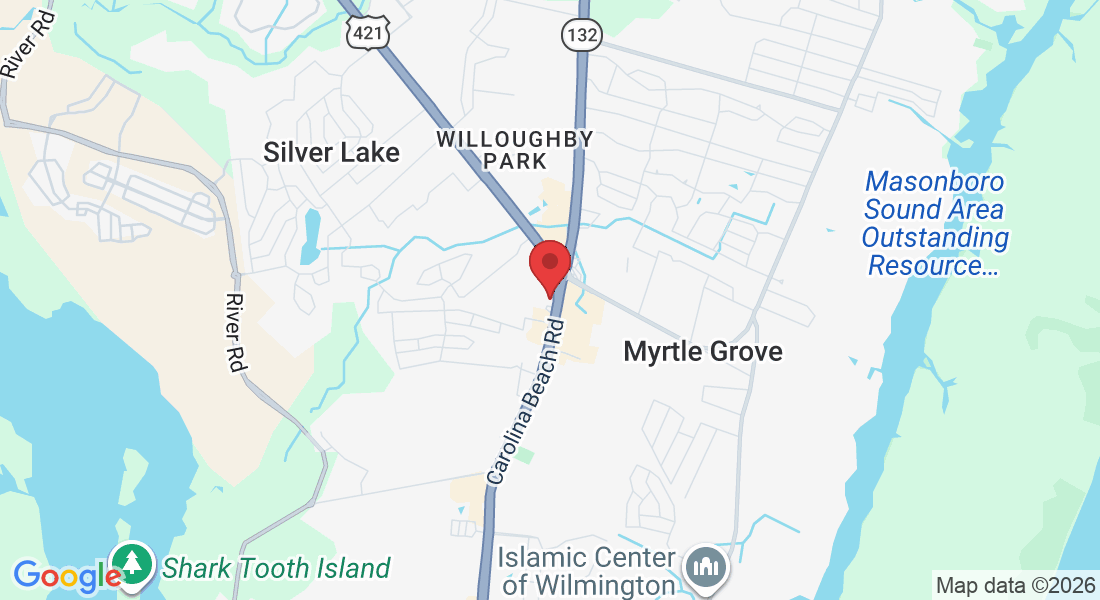
5552 Carolina Beach Rd, Ste F
Wilmington, NC 28412
Phone: (910)-395-5664
Operating Hours
Monday - 8 AM–12 PM
2–6 PM
Tuesday - 8 AM–12 PM
2–6 PM
Wednesday - 8 AM–12 PM
2–6 PM
Thursday - 8 AM–12 PM
2–6 PM
Friday - Closed
Saturday - Closed
Sunday - Closed


