
Neurological Chiropractic Care in Wilmington: Regulating the Autonomic Nervous System
Neurological chiropractic care is a clinical discipline that evaluates and corrects spinal interference patterns that disrupt autonomic nervous system function. Unlike conventional chiropractic, which focuses primarily on pain relief, neurological chiropractic uses objective scanning technology to measure how well the brain and body are communicating. At Myrtle Grove Chiropractic in Wilmington, NC, Dr. Margie applies this model to identify the root neurological causes of conditions that patients have often been managing with medications for years.
What Is the Autonomic Nervous System?
The autonomic nervous system (ANS) controls every involuntary process your body runs: heart rate, digestion, immune response, breathing rate, blood pressure, and hormone release. It operates through two branches. The sympathetic branch activates your stress response. The parasympathetic branch handles rest, digestion, and recovery.
When the ANS is balanced, these two systems take turns running the show. When it is not — when the sympathetic system dominates chronically — the body stays in a state of sustained threat response. Sleep suffers. Digestion breaks down. Inflammatory markers rise. Patients feel exhausted but wired.
Spinal misalignment, particularly in the cervical spine and thoracic spine, is one of the most common and least discussed causes of this imbalance. Vertebral subluxations compress or irritate the nerves that carry ANS signals, and the body's stress response activates even when no real threat exists.
How Neurological Chiropractic Addresses ANS Dysregulation
At Myrtle Grove Chiropractic, the clinical process begins with INSiGHT scanning technology, a three-part assessment that measures:
Heart Rate Variability (HRV): A direct marker of autonomic balance. Low HRV correlates with chronic stress, poor sleep, and increased cardiovascular risk. A 2017 meta-analysis published in Frontiers in Public Health found that HRV is one of the most reliable non-invasive indicators of ANS health.
Surface Electromyography (sEMG): Maps tension patterns in the paraspinal muscles, which are directly innervated by the spinal nerves. Asymmetrical tension points to areas of neurological interference.
Thermal Scanning: Detects skin temperature differentials along the spine, which correspond to autonomic nerve function on each side.
These three measurements together create an objective neurological baseline. Treatment is then guided by data, not symptom reports alone.
What Drives Autonomic Dysfunction in Wilmington Patients
Wilmington's population has specific risk factors worth naming. Coastal humidity and barometric pressure fluctuations affect patients with sensitized nervous systems. A significant portion of the local workforce operates in sedentary desk-based roles or in physically demanding trade and maritime jobs, both of which create distinct spinal loading patterns.
In the 28409 and 28412 zip codes — the primary service area for Myrtle Grove Chiropractic — the clinic's patient data shows that autonomic symptoms including chronic fatigue, digestive irregularity, and poor sleep onset are among the top presenting complaints outside of musculoskeletal pain. This mirrors national data from the American Chiropractic Association, which reports that 60% of chiropractic patients cite secondary symptoms beyond pain as motivation for care.
The Clinical Difference: Neurological Focus vs. Symptom Management
Conventional approaches to ANS dysregulation often involve prescription sleep aids, antidepressants, or acid blockers — each targeting a downstream symptom rather than the upstream neurological pattern. Neurological chiropractic takes a different position: if spinal interference is compressing the nerve pathways that regulate these systems, removing the interference should change system function.
A 2019 study in the Journal of Alternative and Complementary Medicine found that patients receiving chiropractic adjustments to the upper cervical spine showed measurable improvements in HRV within 12 weeks of care. HRV improvement correlates with better autonomic balance, which translates to improved sleep quality, reduced anxiety markers, and more stable energy levels.
Dr. Margie's approach at Myrtle Grove is not to promise those outcomes — outcomes vary — but to measure them. Every patient starts with an INSiGHT scan baseline. Progress is tracked with repeat scans at defined intervals. If the nervous system is improving, the data shows it. If it is not, the care plan adjusts.
Who Is a Candidate for Neurological Chiropractic Care?
Patients who tend to benefit most from this approach share a few patterns:
Chronic conditions that have not responded fully to medication or conventional treatment
Symptoms that involve multiple body systems (sleep, digestion, energy, mood) simultaneously
A history of physical trauma, including car accidents, sports injuries, or difficult births
Children with developmental delays, sensory processing challenges, or frequent illness
Adults experiencing high occupational stress with physical tension patterns
This is not an exhaustive list, and a neurological scan is the only way to know if spinal interference is contributing to a patient's specific presentation.
Scheduling a Neurological Assessment in Wilmington
Myrtle Grove Chiropractic serves patients throughout Wilmington, including Monkey Junction, Myrtle Grove, Pine Valley, and surrounding communities. New patients receive a full INSiGHT neurological scan as part of the initial intake.
To schedule, call the office directly or book online through the practice website.
Frequently Asked Questions
What is neurological chiropractic care? Neurological chiropractic is a clinical approach that uses objective nervous system scanning — including heart rate variability testing, surface electromyography, and thermal spinal scans — to identify spinal misalignments that interfere with autonomic nervous system function. The goal is to restore proper nerve communication between the brain and body.
How does the autonomic nervous system affect my health? The autonomic nervous system regulates all involuntary body functions: digestion, sleep, immune response, heart rate, and stress hormones. Chronic disruption of this system, often caused by spinal subluxations, contributes to fatigue, poor sleep, digestive problems, and immune vulnerability.
Is neurological chiropractic different from regular chiropractic? Yes. Conventional chiropractic often focuses on acute pain relief. Neurological chiropractic uses scanning technology to measure nerve function objectively and guides care decisions based on that data rather than symptoms alone.
Does Myrtle Grove Chiropractic treat children? Yes. Neurological chiropractic is appropriate for patients of all ages, including infants and children. Pediatric assessments use modified techniques appropriate for younger patients.
Where is Myrtle Grove Chiropractic located? Myrtle Grove Chiropractic is located in Wilmington, NC, serving the Myrtle Grove, Monkey Junction, and Pine Valley communities, as well as patients throughout New Hanover County.

Frequently Asked Questions
Myrtle Grove Chiropractic & Acupuncture Center | Wilmington, NC
Got a question? You're not alone. Here are the most common questions we hear from patients in Wilmington and surrounding areas. Can't find your answer? Contact us at 5552 Carolina Beach Rd, Ste F, Wilmington, NC 28412.
Will you pressure me into long-term plans?
No. A good chiropractor recommends care based on your progress and goals, not sales quotas. You’ll never be pushed into prepaid packages.
Do you guarantee results?
No ethical provider guarantees outcomes. Instead, we give honest expectations and focus on steady, realistic improvement.
Will you explain what’s going on with my body?
Yes. You’ll receive clear explanations about your condition, treatment options, and what results you can expect.
Is my care personalized?
Yes. Every treatment plan is tailored to your health history, lifestyle, and specific concerns.
Do you do an exam before treatment?
Yes. We begin with a thorough assessment, health history, and appropriate testing before any adjustments.
Are you properly licensed?
Yes. Our credentials and licensure are current, transparent, and verifiable through the state board.
How do you know when I’m ready to reduce visits?
We base frequency on your progress, stability, and goals—not on contracts. Our goal is independence, not dependence.
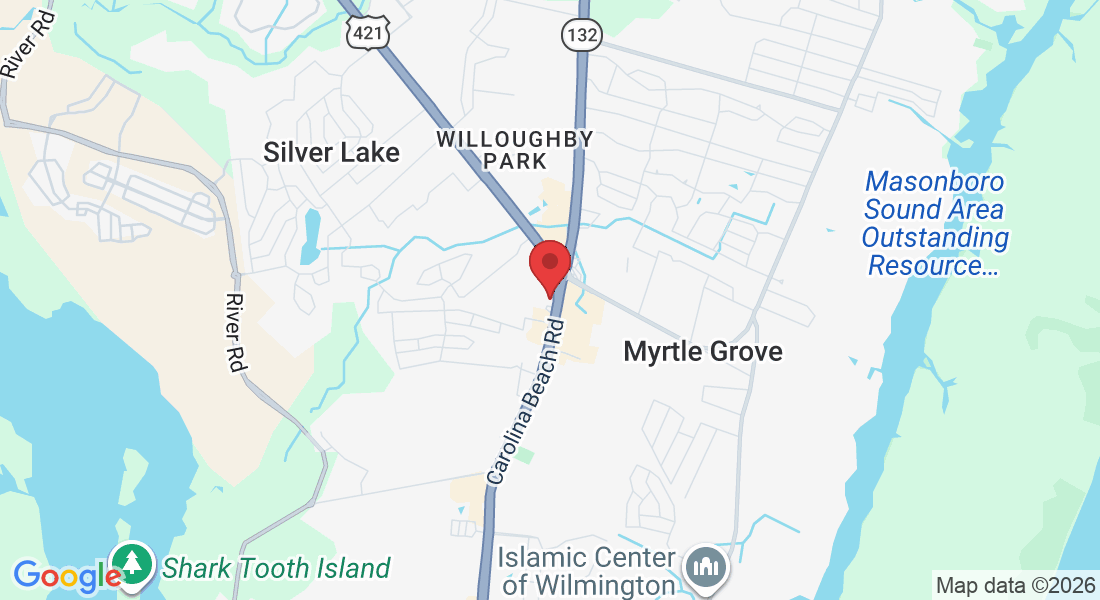
5552 Carolina Beach Rd, Ste F
Wilmington, NC 28412
Phone: (910)-395-5664
Operating Hours
Monday - 8 AM–12 PM
2–6 PM
Tuesday - 8 AM–12 PM
2–6 PM
Wednesday - 8 AM–12 PM
2–6 PM
Thursday - 8 AM–12 PM
2–6 PM
Friday - Closed
Saturday - Closed
Sunday - Closed


