Chiropractic Adjustments vs. Physical Therapy for Sciatica Management
Sciatica — radiating pain, numbness, or weakness that travels from the lower back through the buttock and down the leg along the sciatic nerve pathway — affects an estimated 10-40% of people at some point in their lives, according to a landmark review in the Journal of General Practice. When sciatica strikes, two of the most commonly recommended non-surgical treatments are chiropractic adjustments and physical therapy. Both are evidence-based. Both can work. But they address sciatica through fundamentally different mechanisms, and the right choice depends on what is actually causing the nerve compression in your specific case.
What Causes Sciatica?
Sciatica is a symptom, not a diagnosis. The sciatic nerve is the longest nerve in the body, originating from the L4-S1 nerve roots and passing through the piriformis muscle and down the back of each leg. Compression or irritation of that nerve — anywhere along its path — produces the characteristic radiating symptoms.
The most common causes:
Lumbar disc herniation: The disc nucleus pushes through the annulus and contacts the nerve root. This is the most common cause in people under 50.
Lumbar spinal stenosis: Age-related narrowing of the spinal canal compresses the nerve roots. More common in adults over 60.
Piriformis syndrome: The piriformis muscle in the buttock tightens and compresses the sciatic nerve directly. Often misdiagnosed.
Sacroiliac joint dysfunction: Abnormal movement or inflammation in the SI joint irritates the S1 nerve root.
Spondylolisthesis: One vertebra slips forward on the one below, narrowing the space for the nerve root.
Each of these causes responds differently to treatment.
What Chiropractic Adjustments Do for Sciatica
Chiropractic adjustments for sciatica work by restoring proper movement to spinal joints and reducing disc or joint pressure on the affected nerve root.
For disc-related sciatica: Specific lumbar adjustments can create a decompressive effect on the disc, reducing the herniation's contact with the nerve root. Flexion-distraction technique, a gentle non-force method, is particularly effective for lumbar disc herniations and is well-tolerated even in acute presentations.
For facet-mediated or SI joint sciatica: Direct adjustments to the restricted joint restore normal movement mechanics, reduce local inflammation, and eliminate the mechanical irritation driving the nerve sensitivity.
A 2015 study in the Journal of Manipulative and Physiological Therapeutics compared chiropractic care to simulated manipulation for acute sciatica. Patients receiving real manipulation had significantly greater reductions in pain intensity and global improvement ratings at 12 weeks. A 2014 study in the Spine Journal found that spinal manipulation was as effective as surgical intervention for disc-related sciatica in patients who were otherwise surgical candidates.
What Physical Therapy Does for Sciatica
Physical therapy addresses sciatica primarily through muscle rebalancing, nerve mobilization, and functional rehabilitation.
Piriformis-related sciatica: PT excels here. Targeted stretching, soft tissue work on the piriformis, and hip external rotator strengthening address the muscular cause directly.
Stenosis-related sciatica: Flexion-based exercise protocols can reduce central canal pressure and are a primary PT intervention for stenosis. McKenzie-based extension protocols are effective for some disc presentations.
Post-surgical rehabilitation: Physical therapy is the appropriate primary treatment after discectomy or laminectomy, where spinal manipulation would be contraindicated.
Core rehabilitation: PT's emphasis on deep stabilizer strengthening (transverse abdominis, multifidus) addresses the muscle insufficiency that often perpetuates sciatica after the acute phase resolves.
What Myrtle Grove Chiropractic's Approach Looks Like
At Myrtle Grove Chiropractic, sciatica cases begin with an assessment that includes orthopedic testing (straight leg raise, Faber test, Kemp's test), spinal range of motion, and INSiGHT neurological scanning to identify which nerve levels are involved. Dr. Margie uses this information to determine the cause of the sciatica before recommending a care protocol.
For disc herniations and facet or SI joint dysfunction, chiropractic is typically the primary treatment. For cases involving significant muscular component or post-treatment rehabilitation needs, Dr. Margie refers out or co-manages with physical therapy.
The honest position is that sciatica does not have a single best treatment. It has a best treatment for each specific cause, and that determination requires a clinical assessment — not a self-diagnosis.
If you are in the Wilmington area experiencing sciatica symptoms, schedule a new patient evaluation at Myrtle Grove Chiropractic to identify the specific source of your nerve irritation before committing to a treatment approach.
Frequently Asked Questions
Is chiropractic or physical therapy better for sciatica? Neither is universally better. Chiropractic adjustments are most effective for disc herniation, facet dysfunction, and SI joint-mediated sciatica. Physical therapy excels for piriformis syndrome, stenosis, and post-surgical rehabilitation. The best approach depends on what is actually causing the sciatica.
How long does chiropractic care take to help sciatica? Many patients with acute disc-related sciatica experience significant pain reduction within 4-6 visits. Chronic or complicated presentations may require 8-12 weeks of care. INSiGHT scanning at Myrtle Grove Chiropractic provides objective progress tracking throughout care.
Can I do both chiropractic and physical therapy at the same time? Yes. Combined care is often more effective than either treatment alone, particularly for cases involving both mechanical compression (addressable by chiropractic) and muscular dysfunction (addressable by PT).

Frequently Asked Questions
Myrtle Grove Chiropractic & Acupuncture Center | Wilmington, NC
Got a question? You're not alone. Here are the most common questions we hear from patients in Wilmington and surrounding areas. Can't find your answer? Contact us at 5552 Carolina Beach Rd, Ste F, Wilmington, NC 28412.
Will you pressure me into long-term plans?
No. A good chiropractor recommends care based on your progress and goals, not sales quotas. You’ll never be pushed into prepaid packages.
Do you guarantee results?
No ethical provider guarantees outcomes. Instead, we give honest expectations and focus on steady, realistic improvement.
Will you explain what’s going on with my body?
Yes. You’ll receive clear explanations about your condition, treatment options, and what results you can expect.
Is my care personalized?
Yes. Every treatment plan is tailored to your health history, lifestyle, and specific concerns.
Do you do an exam before treatment?
Yes. We begin with a thorough assessment, health history, and appropriate testing before any adjustments.
Are you properly licensed?
Yes. Our credentials and licensure are current, transparent, and verifiable through the state board.
How do you know when I’m ready to reduce visits?
We base frequency on your progress, stability, and goals—not on contracts. Our goal is independence, not dependence.
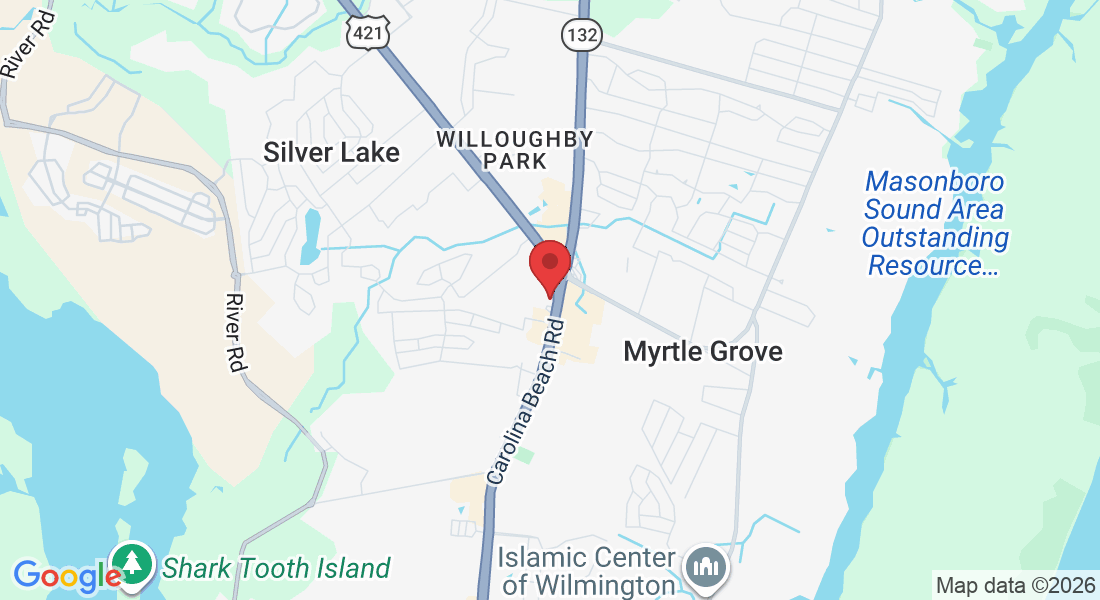
5552 Carolina Beach Rd, Ste F
Wilmington, NC 28412
Phone: (910)-395-5664
Operating Hours
Monday - 8 AM–12 PM
2–6 PM
Tuesday - 8 AM–12 PM
2–6 PM
Wednesday - 8 AM–12 PM
2–6 PM
Thursday - 8 AM–12 PM
2–6 PM
Friday - Closed
Saturday - Closed
Sunday - Closed


