
BrainTap Technology and Cortisol Reduction: A Science-Based Approach to Stress
BrainTap is a neurostimulation technology that uses audio-visual brainwave entrainment to guide the brain from high-frequency stress states into lower-frequency recovery states, with measurable effects on cortisol levels, sleep quality, and autonomic nervous system tone. At Myrtle Grove Chiropractic in Wilmington, NC, Dr. Margie integrates BrainTap sessions into neurological care plans as a complementary tool for patients dealing with chronic stress, sleep disorders, and cortisol dysregulation.
What BrainTap Does and How It Works
BrainTap uses a combination of binaural beats, isochronic tones, light frequency stimulation through the eyes, and guided audio sessions to shift brainwave states. The technology targets specific EEG frequency bands:
Beta (12-38 Hz): The waking, alert, often stress-activated state
Alpha (8-12 Hz): Relaxed focus; the state associated with learning and reduced anxiety
Theta (4-8 Hz): Deep relaxation and creativity; associated with early sleep stages
Delta (0.5-4 Hz): Deep sleep and cellular repair
Chronic stress keeps most people locked in elevated beta. BrainTap's entrainment protocols are designed to break that pattern, training the brain to shift more readily between states. This is not passive relaxation — it is repeated neurological conditioning.
The Cortisol Problem
Cortisol is the body's primary stress hormone, produced by the adrenal glands in response to signals from the hypothalamic-pituitary-adrenal (HPA) axis. Short-term cortisol release is adaptive — it mobilizes energy, sharpens focus, and prepares the body for acute demands.
Chronic cortisol elevation is a different situation. When the HPA axis stays activated, cortisol damages the hippocampus (impairing memory), suppresses immune function, elevates blood pressure, disrupts sleep architecture, increases visceral fat storage, and dysregulates blood sugar. The American Institute of Stress estimates that 75-90% of all physician visits in the U.S. involve stress-related complaints.
What drives sustained HPA activation? In most patients, it is a combination of perceived psychological stress and sympathetic nervous system dysregulation — often with a spinal component. When the cervical spine is subluxated, the vagus nerve pathway that normally puts the brakes on the stress response is compromised. The body cannot turn off what should be a temporary response.
BrainTap's Effect on the HPA Axis
A 2020 study by BrainTap Technologies in partnership with independent researchers measured salivary cortisol levels before and after BrainTap sessions in a cohort of 50 participants. Results showed an average 11% reduction in cortisol following a single 20-minute BrainTap session. Cumulative sessions over four weeks produced sustained reductions in baseline cortisol that persisted beyond the sessions themselves.
A broader body of research on brainwave entrainment supports these findings. A 2008 meta-analysis published in Alternative Therapies in Health and Medicine reviewed 20 peer-reviewed studies on audio-visual entrainment and found consistent reductions in self-reported anxiety, cortisol markers, and sympathetic nervous system indicators.
Why Myrtle Grove Chiropractic Combines BrainTap with Chiropractic Care
The combination is not arbitrary. Spinal adjustment and brainwave entrainment address the same neurological problem from different angles.
Chiropractic adjustments remove structural interference from the nervous system — restoring the physical pathway for proper ANS signaling. BrainTap addresses the learned stress response pattern — the trained neural habit of staying in high-alert states that persists even after structural interference is removed.
Dr. Margie observes that patients who combine both modalities consistently show faster HRV improvements on repeat INSiGHT scans than those receiving adjustments alone. This is not surprising from a neurological standpoint: removing the interference opens the pathway, but the brain still needs to relearn how to use it.
What to Expect During a BrainTap Session
BrainTap sessions are conducted at the clinic using a headset that delivers the audio and light frequency components. Sessions run between 15 and 30 minutes. Most patients report feeling noticeably calmer within the first session. After several sessions, many report improved sleep onset, reduced anxiety reactivity, and greater mental clarity.
Sessions are typically scheduled after a chiropractic adjustment, allowing the nervous system to integrate the spinal correction in a parasympathetic state rather than returning immediately to sympathetic activation.
Patients Who Benefit Most from BrainTap at Myrtle Grove
Adults with high-stress occupations (healthcare workers, attorneys, first responders, executives)
Patients with insomnia or disrupted sleep architecture
Individuals with anxiety who want a non-pharmacological adjunct
Athletes using biofeedback for performance optimization
Patients who have experienced trauma and show elevated baseline sympathetic tone on INSiGHT scans
Getting Started with BrainTap in Wilmington
BrainTap is available at Myrtle Grove Chiropractic as part of integrated neurological care plans. It is also available as a standalone service for patients who are not new to chiropractic care but want to address stress physiology specifically. Contact the office or book online to discuss whether BrainTap is appropriate for your situation.
Frequently Asked Questions
What is BrainTap technology? BrainTap is a neurostimulation device that uses binaural beats, isochronic tones, and guided audio to shift brainwave frequencies from high-stress beta states to restorative alpha, theta, and delta states. It is used clinically to reduce cortisol, improve sleep, and support autonomic nervous system recovery.
Does BrainTap reduce cortisol? Research indicates that BrainTap sessions produce measurable reductions in salivary cortisol. A 2020 study found an average 11% cortisol reduction after a single 20-minute session, with larger cumulative reductions following four weeks of regular sessions.
How does BrainTap differ from meditation? Meditation requires active practice and years of development to achieve consistent deep states. BrainTap uses audio-visual frequency entrainment to guide the brain into those states more rapidly, making it accessible to patients who find traditional meditation difficult or inconsistent.
Is BrainTap available in Wilmington, NC? Yes. BrainTap sessions are available at Myrtle Grove Chiropractic in Wilmington, integrated into neurological care plans or as standalone stress reduction sessions.

Frequently Asked Questions
Myrtle Grove Chiropractic & Acupuncture Center | Wilmington, NC
Got a question? You're not alone. Here are the most common questions we hear from patients in Wilmington and surrounding areas. Can't find your answer? Contact us at 5552 Carolina Beach Rd, Ste F, Wilmington, NC 28412.
Will you pressure me into long-term plans?
No. A good chiropractor recommends care based on your progress and goals, not sales quotas. You’ll never be pushed into prepaid packages.
Do you guarantee results?
No ethical provider guarantees outcomes. Instead, we give honest expectations and focus on steady, realistic improvement.
Will you explain what’s going on with my body?
Yes. You’ll receive clear explanations about your condition, treatment options, and what results you can expect.
Is my care personalized?
Yes. Every treatment plan is tailored to your health history, lifestyle, and specific concerns.
Do you do an exam before treatment?
Yes. We begin with a thorough assessment, health history, and appropriate testing before any adjustments.
Are you properly licensed?
Yes. Our credentials and licensure are current, transparent, and verifiable through the state board.
How do you know when I’m ready to reduce visits?
We base frequency on your progress, stability, and goals—not on contracts. Our goal is independence, not dependence.
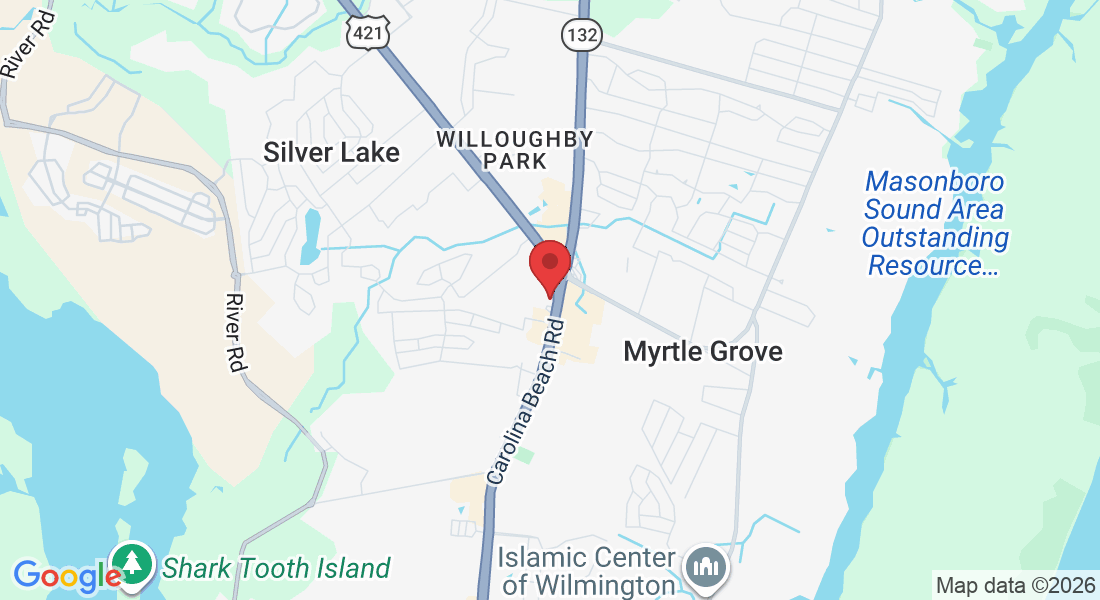
5552 Carolina Beach Rd, Ste F
Wilmington, NC 28412
Phone: (910)-395-5664
Operating Hours
Monday - 8 AM–12 PM
2–6 PM
Tuesday - 8 AM–12 PM
2–6 PM
Wednesday - 8 AM–12 PM
2–6 PM
Thursday - 8 AM–12 PM
2–6 PM
Friday - Closed
Saturday - Closed
Sunday - Closed


