
How to Recover from a Sports Injury: Complete Chiropractic Guide in Wilmington, NC
Introduction
Sports injuries can sideline you fast—whether you're an athlete or someone active in your daily life. From whiplash during a car accident to a twisted ankle during a pickup basketball game, acute trauma demands immediate, expert care. The difference between a quick recovery and months of pain comes down to one thing: getting the right treatment, right away.
In this guide, we'll walk you through what happens during injury recovery, when to see a chiropractor, and exactly what to expect from evidence-based treatment at Myrtle Grove Chiropractic in Wilmington, NC. By the end, you'll know exactly what your body needs to heal faster and stronger.
Common Sports Injuries & Why They Matter
Sports injuries come in many forms. Some are obvious (a torn ligament), while others sneak up on you (a muscle strain that gets worse over time).
The most common ones we treat:
ACL Tears & Knee Injuries — These happen when you plant your foot and twist, or when you're hit from the side. Your ACL (anterior cruciate ligament) is responsible for knee stability. A tear means your knee becomes unstable, and movement becomes painful and risky.
Sprains & Strains — A sprain is a stretched or torn ligament (the tissue connecting bone to bone). A strain is a stretched or torn muscle or tendon. Both are painful, both limit movement, and both get worse if untreated.
Rotator Cuff Injuries — Your rotator cuff is a group of muscles and tendons that keep your shoulder stable. Throwing sports, swimming, and overhead movements can tear these tissues. Once torn, overhead movement becomes nearly impossible without pain.
Whiplash — Even if you're not in a car accident, whiplash happens anytime your neck experiences sudden acceleration-deceleration. The ligaments and muscles in your neck stretch beyond their limits, causing pain, stiffness, and sometimes long-term nerve issues.
Why Early Care Matters — The first 24-72 hours after an injury are critical. During this window, inflammation is highest, but your body is also primed to heal. If you ignore the injury or wait "to see if it gets better," you're giving inflammation a chance to become chronic. Chronic injuries are harder to treat and take much longer to resolve.
The Science of Injury Recovery: Three Phases
Your body doesn't heal all at once. Recovery happens in three distinct phases. Understanding these phases helps you know what to expect and why patience matters.
Phase 1: Acute Phase (First 72 Hours)
This is the inflammation phase. Your body's immune system floods the injury site with inflammatory cells to clean up damaged tissue. You'll notice:
Swelling and redness
Sharp pain with movement
Limited range of motion
Warmth around the injury
What's happening: Your body is doing the right thing. Inflammation is protective and necessary. But inflammation also causes pain and immobility.
What NOT to do: Don't ignore ice. Don't keep moving hard. Don't wait to get evaluated.
Phase 2: Subacute Phase (Days 3-21)
Once the acute inflammatory response peaks, your body shifts into rebuilding mode. New tissue starts forming. You'll notice:
Swelling decreases (but doesn't disappear)
Pain is less sharp, more of a dull ache
Movement becomes easier, but still limited
Bruising may appear or deepen
What's happening: Your body is laying down new collagen fibers to repair the damaged tissue. This tissue is fragile and unorganized at first.
What to do: Controlled movement helps organize the new tissue. This is when chiropractic care and therapeutic exercises become crucial. Sitting still sounds safe but actually slows healing.
Phase 3: Remodeling Phase (Weeks 3+)
The new tissue starts organizing, strengthening, and integrating with surrounding tissue. You'll notice:
Significant decrease in pain
Much better movement and function
Return to normal activities feels possible
Occasional soreness after activity
What's happening: The newly formed tissue is being stressed and strengthened, similar to how muscles grow when you exercise. The tissue remodels to handle the demands you place on it.
Why rushing recovery backfires: Many people think they're "healed" in week 3 and go back to full activity. But the tissue is only 30-40% as strong as it should be. Returning to full sports too early often causes re-injury, which restarts the whole cycle and creates scar tissue.
When to See a Chiropractor for a Sports Injury
Not every sports injury requires a chiropractor. Some minor strains heal on their own in a week. But certain injuries demand professional evaluation.
See a chiropractor immediately if:
You can't move the injured area without sharp pain
There's significant swelling that doesn't improve in 24 hours
You heard a "pop" or "snap" at the moment of injury
The injury doesn't feel stable (for example, your knee "gives out")
You have numbness, tingling, or weakness below the injury
You have visible deformity (the limb looks wrong)
See a chiropractor within 48 hours if:
You have pain that's getting worse instead of better
You have muscle weakness or loss of function
The injury limits your daily activities
You were in any kind of trauma (even low-speed car accidents cause serious injury)
What a chiropractor evaluates:
During your initial appointment, your chiropractor will:
Take a detailed history — How did the injury happen? What were you doing? Did you hear anything pop? Have you had similar injuries before?
Perform orthopedic tests — These tests check for ligament tears, muscle strains, nerve damage, and structural damage. They're quick but very revealing.
Order imaging if needed — X-rays, MRI, or ultrasound can visualize soft tissue damage that exams alone can't see.
Check your range of motion — What movements hurt? Which directions cause pain? This tells your chiropractor what tissues are involved.
Evaluate spinal alignment — Many sports injuries affect spinal alignment, even if the injury feels like it's only in one area (like an ankle). Your chiropractor checks your whole body for misalignment.
After evaluation, your chiropractor will explain exactly what's wrong and what recovery will look like.
Chiropractic Treatment for Sports Injuries
Once your chiropractor has diagnosed your injury, treatment focuses on three goals: reducing inflammation, restoring alignment, and rebuilding strength.
Spinal Alignment Restoration
When you injure yourself, your body instinctively protects the injured area by tensing muscles around it. This tension can pull your spine out of alignment. Even if your injury is in your ankle, a misaligned spine slows your body's ability to heal the injury.
How chiropractic adjustments help:
Restore normal vertebral positioning
Reduce nerve irritation
Improve blood flow to the injured area
Speed up your body's natural healing response
Your chiropractor uses specific, controlled adjustments to restore alignment without forcing the injured area.
Soft Tissue Therapy
Beyond the bones, your muscles, tendons, and ligaments need attention. Soft tissue therapy includes:
Therapeutic massage — Breaks up scar tissue, improves circulation, and reduces muscle tension that slows healing.
Trigger point release — Targets knots in muscles that limit movement and cause pain.
Myofascial release — Works with the fascia (connective tissue wrapping your muscles) to restore normal movement patterns.
These techniques speed recovery and prevent the stiffness and reduced range of motion that often lingers after injuries.
Movement Patterns Correction
How you move matters. If you've been protecting an injured area for days or weeks, you develop compensatory movement patterns. You might unconsciously favor one leg, hunch your shoulder, or hold your head at an angle.
These compensations feel "normal" to you, but they're actually slowing healing and creating new injuries.
Your chiropractor will:
Identify your compensatory patterns
Show you how to move correctly
Give you exercises to retrain your nervous system
Help you return to normal movement gradually
Acupuncture for Inflammation
If swelling and inflammation are holding back your recovery, acupuncture can help. Acupuncture:
Reduces inflammation at the cellular level
Improves blood flow to the injured area
Stimulates your body's natural pain-relieving chemicals
Works within 24-48 hours of treatment
Many athletes find that combining acupuncture with chiropractic adjustments dramatically speeds recovery.
Recovery Timeline: What to Expect Week by Week
Every injury is different, but here's a realistic timeline for typical sports injuries treated with chiropractic care.
Week 1-2: Initial Healing
Pain level: High initially, then decreasing
Movement: Very limited
What to do: Rest, ice, compression. Start gentle chiropractic care if pain allows.
Expect: 20-30% reduction in pain by end of week 2
Week 3-6: Progressive Strengthening
Pain level: Moderate, mostly ache rather than sharp pain
Movement: Increasing range, still limited with certain movements
What to do: Regular chiropractic care, therapeutic exercises, gentle stretching
Expect: 50-70% reduction in pain by week 6. You can do most daily activities but not sports.
Week 7-12: Return to Activity
Pain level: Mild or none during normal activities
Movement: Approaching normal, 80-90% of original range
What to do: Progress exercises, return to light sport-specific training
Expect: 90%+ recovery by week 12. You're back to most activities but maybe not at 100% intensity yet.
Week 12+: Long-Term Prevention
You're healed, but tissue is still "new" and vulnerable
Continue maintenance exercises to prevent re-injury
Regular chiropractic care keeps you aligned and injury-free
How to Speed Your Recovery
Beyond chiropractic care, several factors speed or slow your healing.
Speed recovery:
Follow your chiropractor's exercise program exactly
Ice in the first 48 hours, then apply heat
Stay hydrated (water helps tissue repair)
Get 7-9 hours of sleep (healing happens during sleep)
Eat protein at every meal (your body needs it to build new tissue)
Avoid re-injury (don't do activities that pain)
Slow recovery:
Continuing intense activity too early
Ignoring pain (pain is your body's signal to protect the injury)
Poor sleep
Inadequate nutrition
Not following your treatment plan
Stress (stress hormones slow healing)
Why Choose Myrtle Grove Chiropractic for Sports Injury Treatment
We specialize in getting active people back to the activities they love. Here's what sets us apart:
Experience — We've treated hundreds of sports injuries, from minor strains to serious ACL tears. We know the recovery pathway for every type of injury.
Evidence-Based Care — We don't guess. We diagnose thoroughly, treat specifically, and track your progress. Your care plan is based on what your body actually needs, not a one-size-fits-all protocol.
Personalized Treatment — No two injuries are identical. We customize your care based on your specific injury, your sport, and your goals. If you're training for a marathon, we get you ready for that marathon—not just "back to normal."
Multiple Treatment Options — Chiropractic adjustments, acupuncture, soft tissue therapy, and therapeutic exercises. We combine what works for your injury.
Transparent Communication — We explain what's wrong, why it happened, and exactly what recovery will look like. You're a partner in your healing, not a passive patient.
Ready to Get Back in the Game?
If you've suffered a sports injury, waiting won't make it better. The first 72 hours are critical, and every day you delay treatment is a day lost in recovery.
At Myrtle Grove Chiropractic in Wilmington, NC, we're ready to evaluate your injury, create a recovery plan, and get you back to the activities you love.
Schedule your sports injury evaluation today. Call (910) 395-5664 or click below to book your appointment.
Related Articles
Learn more about injury recovery:

Frequently Asked Questions
Myrtle Grove Chiropractic & Acupuncture Center | Wilmington, NC
Got a question? You're not alone. Here are the most common questions we hear from patients in Wilmington and surrounding areas. Can't find your answer? Contact us at 5552 Carolina Beach Rd, Ste F, Wilmington, NC 28412.
Will you pressure me into long-term plans?
No. A good chiropractor recommends care based on your progress and goals, not sales quotas. You’ll never be pushed into prepaid packages.
Do you guarantee results?
No ethical provider guarantees outcomes. Instead, we give honest expectations and focus on steady, realistic improvement.
Will you explain what’s going on with my body?
Yes. You’ll receive clear explanations about your condition, treatment options, and what results you can expect.
Is my care personalized?
Yes. Every treatment plan is tailored to your health history, lifestyle, and specific concerns.
Do you do an exam before treatment?
Yes. We begin with a thorough assessment, health history, and appropriate testing before any adjustments.
Are you properly licensed?
Yes. Our credentials and licensure are current, transparent, and verifiable through the state board.
How do you know when I’m ready to reduce visits?
We base frequency on your progress, stability, and goals—not on contracts. Our goal is independence, not dependence.
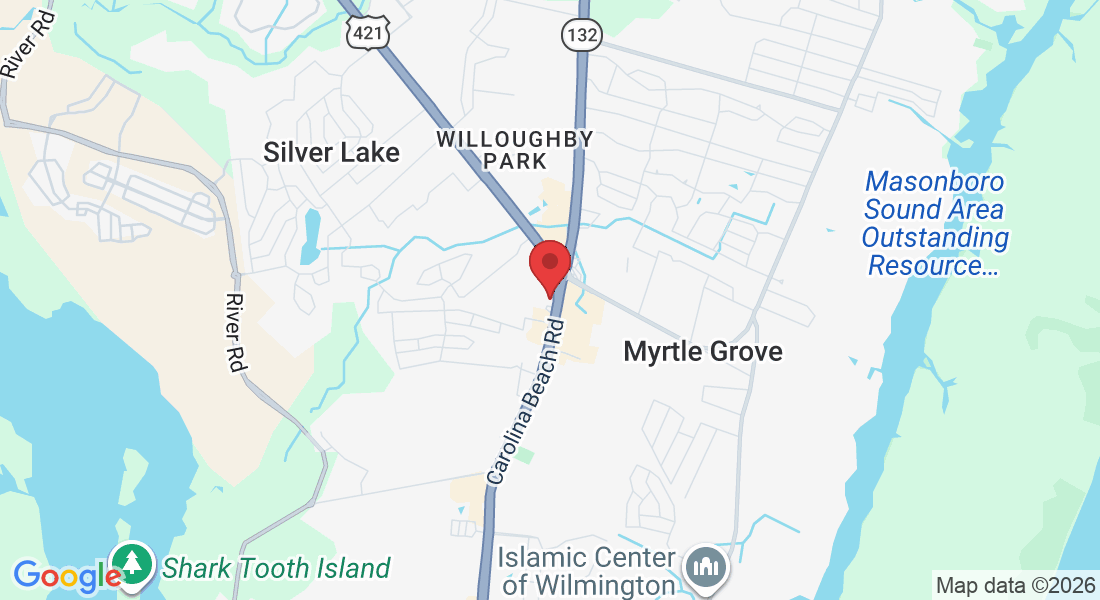
5552 Carolina Beach Rd, Ste F
Wilmington, NC 28412
Phone: (910)-395-5664
Operating Hours
Monday - 8 AM–12 PM
2–6 PM
Tuesday - 8 AM–12 PM
2–6 PM
Wednesday - 8 AM–12 PM
2–6 PM
Thursday - 8 AM–12 PM
2–6 PM
Friday - Closed
Saturday - Closed
Sunday - Closed


