
What is Dry Needling and Does It Actually Work? A Chiropractor's Perspective
Introduction
You've heard the term dry needling. Maybe a friend swore by it after a hamstring injury. Maybe your physical therapist mentioned it, or you fell down a rabbit hole online trying to figure out why your shoulder still hurts after weeks of stretching.
Here's the confusion most people run into: dry needling and acupuncture both use thin needles, so people assume they're the same thing. They're not — and the difference matters depending on why you're in pain.
This guide breaks down exactly what dry needling is, how it works, how it compares to acupuncture, and what the research says about both. If you're dealing with muscle pain, trigger points, or a nagging injury that hasn't fully resolved, this is everything you need to make an informed decision.
What Is Dry Needling?
Dry needling is a western medicine technique where a thin, sterile needle is inserted directly into a muscle trigger point to release tension and stimulate healing. The word "dry" means no medication or fluid is injected — just the needle itself, placed precisely into the muscle tissue causing pain.
What Are Trigger Points?
Trigger points are small, hyper-irritable knots that form inside muscle fibers when they become chronically tight or overworked. They're a major source of persistent pain that doesn't respond well to rest, stretching, or massage alone.
A single trigger point can:
Cause local pain at the site of tension
Refer pain to completely different areas (a tight upper trapezius can cause headaches; tight glutes can cause knee pain)
Restrict range of motion and reduce athletic performance
Prevent full recovery from injury or training
Trigger points are why the place that hurts is often not where the actual problem is.
How Does Dry Needling Release a Trigger Point?
When a needle is inserted into an active trigger point, it causes a local twitch response — an involuntary contraction of the muscle fibers. This twitch:
Mechanically disrupts the contracted muscle fibers
Flushes out accumulated inflammatory chemicals (substance P, bradykinin)
Stimulates fresh blood flow into an area that's often oxygen-depleted
Resets the neuromuscular signaling that's keeping the muscle locked in tension
The result is typically immediate or near-immediate reduction in pain and improved range of motion.
What Does Dry Needling Feel Like?
Most patients expect pain and are surprised by how tolerable dry needling actually is. The needle entry itself feels like a brief pinch. When the needle reaches the trigger point, patients feel a dull ache or mild cramping sensation — similar to a muscle cramp — lasting only a few seconds.
That brief cramping sensation is the twitch response. It's a sign the technique is working.
What Is Acupuncture?
Acupuncture is a traditional Chinese medicine practice where thin needles are placed at specific points along the body's meridian system to balance the flow of energy (qi) and support overall health. Acupuncture has been practiced for over 2,500 years and is one of the most researched complementary medicine techniques in the world.
How Acupuncture Works
Acupuncture operates on two levels:
Traditional framework: Needles are placed at specific acupoints along meridians — energy pathways that run throughout the body. When qi is blocked or imbalanced, pain and illness follow. Acupuncture restores flow.
Modern physiological framework: Research has shown that acupuncture stimulates the nervous system to release endorphins and serotonin, reduces systemic inflammation, modulates the autonomic nervous system, and improves circulation — all of which contribute to pain relief and healing, regardless of how you view the traditional theory behind it.
What Does Acupuncture Feel Like?
Acupuncture needles are extremely thin — much thinner than a hypodermic needle — and most patients feel little to no discomfort during insertion. After the needles are placed, you typically feel a sense of heaviness, warmth, or gentle tingling at the needle sites. Most sessions involve resting with the needles in place for 20–30 minutes, which many patients find deeply relaxing.
What Conditions Does Dry Needling Treat?
Dry needling is specifically indicated for muscle-related pain caused by trigger points. The most common conditions it addresses:
Myofascial Pain Syndrome
Chronic muscle pain driven by trigger points is the core application of dry needling. Studies show that dry needling reduces pain intensity and improves pressure pain thresholds in patients with myofascial pain syndrome (Dommerholt, 2011, Journal of Manual & Manipulative Therapy).
Sports Injuries and Athletic Recovery
Dry needling is widely used in sports medicine to accelerate recovery from:
Hamstring and quadriceps strains
Rotator cuff strains and shoulder impingement
Plantar fasciitis
Achilles tendinopathy
IT band syndrome
Post-training muscle soreness
A 2017 systematic review in the Journal of Orthopaedic & Sports Physical Therapy found that dry needling combined with other physical therapy was more effective than physical therapy alone for reducing pain and improving function.
Tension Headaches
Tight muscles in the neck, upper trapezius, and suboccipital region are a primary driver of tension headaches. Dry needling these specific muscles can reduce headache frequency and intensity significantly.
Lower Back Pain
Trigger points in the lumbar erectors, quadratus lumborum, gluteus medius, and hip flexors contribute to the majority of chronic lower back pain cases. Dry needling releases these muscles directly, often producing immediate improvements in movement.
Neck Pain and Cervicogenic Pain
Whether caused by poor posture, whiplash, or chronic muscle guarding, tight cervical muscles respond well to dry needling. Point of care: a 2014 randomized controlled trial found dry needling equally effective as manual therapy for neck pain with significantly faster onset of relief.
Knee Pain
Often, knee pain isn't a knee problem — it's a quadriceps and hamstring trigger point problem. Needling the surrounding muscles frequently eliminates knee pain without touching the joint itself.
What Conditions Does Acupuncture Treat?
Where acupuncture shines is in systemic and chronic conditions where the nervous system, inflammation, and overall body regulation play a larger role:
Chronic pain (low back, neck, osteoarthritis) — strong evidence
Migraines and tension headaches — strong evidence
Chemotherapy-related nausea and vomiting — FDA recognized
Anxiety, stress, and insomnia — growing body of evidence
Fibromyalgia and widespread pain syndromes
Menstrual pain and hormonal regulation
Digestive disorders
Post-surgical recovery and pain management
A comprehensive 2012 meta-analysis published in Archives of Internal Medicine, pooling data from 29 high-quality randomized trials (nearly 18,000 patients), concluded that acupuncture is effective for chronic pain and is not simply a placebo.
The Science: Does Dry Needling Actually Work?
Yes — and the mechanism is well understood.
Pain reduction: Multiple randomized controlled trials confirm that dry needling reduces pain as effectively as manual therapy and stretching, often faster. A 2016 Cochrane review found dry needling provided greater short-term pain reduction than sham needling or no treatment.
Range of motion: Studies consistently show improved range of motion following dry needling, often measurable immediately after a single session.
Athletic recovery: Research from sports medicine contexts shows athletes return to full training faster when dry needling is incorporated into their recovery protocol versus rehabilitation exercise alone.
Durability: The relief from dry needling is physiological — it actually changes the muscle by releasing the trigger point and restoring normal neuromuscular signaling. It's not pain masking.
Can You Combine Dry Needling and Acupuncture?
Yes — and in some cases, combining them produces better outcomes than either alone.
A trained acupuncturist can use needling techniques that address both trigger points and broader systemic conditions in a single session. For example:
Dry needling technique on a tight upper trapezius to release a specific trigger point causing headaches
Acupuncture points like GB20 or LI4 to reduce systemic inflammation and calm the nervous system
Result: Faster local relief plus support for the underlying tension pattern
This integrative approach is increasingly common and well-supported by clinical practice.
Dry Needling vs. Other Treatments
Dry Needling vs. Stretching
Stretching is beneficial for general flexibility, but it cannot release a hypertonic trigger point. A muscle locked in a trigger point pattern will resist passive stretching — it just stays tight. Dry needling releases the trigger point first, making stretching and exercise far more effective afterward.
Bottom line: Dry needling unlocks what stretching can't.
Dry Needling vs. Massage
Massage can reduce general muscle tension over time, but it requires repeated deep-pressure sessions to address trigger points — and results vary by therapist. Dry needling addresses the trigger point directly in a fraction of the time.
Bottom line: Dry needling is faster and more targeted for trigger points. Massage is excellent for maintenance and general relaxation.
Dry Needling vs. Pain Medication
Pain medication manages the symptom. When it wears off, the trigger point is still there. Dry needling addresses the actual structural cause of pain — the trigger point itself. There are no systemic side effects, no tolerance or dependency risk, and the relief is lasting.
Bottom line: Dry needling fixes the problem. Medication masks it.
Dry Needling vs. Physical Therapy
These work best together, not as alternatives. Dry needling releases trigger points quickly so muscles can move properly. Physical therapy then builds strength and movement patterns to prevent those trigger points from reforming.
Bottom line: Dry needling + physical therapy is more effective than either alone.
Who Benefits Most from Dry Needling?
Athletes and active people — If muscle pain, tightness, or a nagging injury is limiting your training, dry needling can restore function faster than passive rest.
People with chronic muscle pain — If you've had tight, painful muscles for months or years and other treatments haven't resolved it, trigger point dry needling is often the missing piece.
People who don't respond to stretching or massage — If your muscles stay tight no matter what you do, there's likely an active trigger point that needs to be mechanically released.
Anyone dealing with referred pain — If your pain doesn't seem to make sense (hip pain from a back trigger point, headaches from a neck trigger point), dry needling addresses the source, not just the symptom.
Post-injury recovery — Anyone recovering from a muscle strain, overuse injury, or sports injury who wants to return to full function faster.
What to Expect During a Dry Needling Session
Assessment: Your practitioner will assess your posture, movement, and muscle tension. They'll palpate your muscles to locate active trigger points before needling.
Positioning: You'll be positioned so the target muscle is accessible and relaxed.
Needle insertion: A thin needle is inserted into the trigger point. You'll feel a brief pinch at the skin, followed by the characteristic dull ache or cramping sensation as the needle contacts the trigger point.
Trigger point release: The practitioner may use a pistol-grip technique (moving the needle in and out repeatedly to elicit multiple twitch responses) or leave the needle in place briefly. The twitches are the muscle releasing.
Session length: Treatment typically takes 10–20 minutes depending on how many trigger points are addressed.
After the session: Most patients experience immediate pain relief and improved movement. Some experience mild muscle soreness for 24–48 hours — similar to how muscles feel after a good workout. This resolves on its own and is completely normal.
How many sessions? For acute muscle pain, 1–3 sessions often produces significant relief. Chronic trigger points may require 4–6 sessions for complete resolution.
Is Dry Needling Safe?
Yes — when performed by a properly trained practitioner, dry needling is very safe.
Minimal side effects:
Mild muscle soreness (24–48 hours, resolves on its own)
Occasional light bruising at needle site
Temporary fatigue following session (uncommon)
Serious side effects (infection, nerve injury, pneumothorax) are extremely rare and primarily associated with untrained practitioners.
Who should avoid dry needling:
Pregnancy (certain areas contraindicated)
Active blood clotting disorders or anticoagulant medication
Severe needle phobia
Compromised immune system (relative contraindication — case-by-case)
In North Carolina, dry needling is performed by licensed physical therapists, chiropractors, and acupuncturists who hold dry needling certification. All practitioners use sterile, single-use needles.
Acupuncture as a Powerful Alternative for Muscle Pain in Wilmington, NC
Dry needling is an excellent, evidence-based option — but it's not the only needle-based treatment that works for muscle pain and trigger points.
Acupuncture, when practiced by a skilled provider, addresses many of the same conditions through a different but equally valid mechanism. Acupuncture needles can be placed at trigger point locations (a technique called "Ashi points" in Chinese medicine) while simultaneously targeting the nervous system, reducing inflammation, and addressing the systemic patterns contributing to your pain.
For patients dealing with:
Chronic muscle tension alongside stress or sleep disruption
Recurring pain patterns that keep coming back
Widespread pain that isn't isolated to a single muscle
Conditions where nervous system regulation matters (headaches, fibromyalgia, anxiety-related tension)
...acupuncture often addresses the full picture more comprehensively than dry needling alone.
At Myrtle Grove Chiropractic in Wilmington, NC, we offer acupuncture as part of a comprehensive pain relief approach — combined with chiropractic adjustments — to address both the muscular tension and the structural misalignment that often drives it.
If dry needling has been on your radar, acupuncture may be the answer you've been looking for — and it's available right here in Wilmington.
Frequently Asked Questions
Is dry needling the same as acupuncture? No. Dry needling is based on western anatomy and targets specific muscle trigger points. Acupuncture is based on traditional Chinese medicine and targets acupoints along meridian pathways. They use similar needles but have different theoretical frameworks, techniques, and point selection.
Does dry needling hurt? Most patients find it tolerable. The needle entry is a brief pinch. The trigger point contact produces a dull ache or brief cramping sensation (the twitch response) that lasts a few seconds. Most patients are surprised by how manageable it is.
How quickly does dry needling work? Many patients experience pain relief and improved movement immediately or within 24 hours of their first session. Chronic trigger points may require multiple sessions.
Can acupuncture treat the same things as dry needling? For many conditions — especially chronic muscle pain, tension headaches, and referred pain — yes. Skilled acupuncturists use trigger point needling (Ashi points) alongside traditional acupuncture techniques to address both local and systemic contributors to pain.
Is acupuncture covered by insurance? Coverage varies by plan. Many insurance providers now cover acupuncture for certain conditions including chronic pain and headaches. Contact your provider to confirm your specific benefits.
Where can I get acupuncture in Wilmington, NC? Myrtle Grove Chiropractic offers acupuncture services in Wilmington. Call (910) 395-5664 to schedule your evaluation.
The Bottom Line
Dry needling and acupuncture are both effective needle-based treatments for pain — they just work differently and excel in different situations.
Dry needling is fast, targeted, and highly effective for acute muscle pain, athletic injuries, and stubborn trigger points that haven't responded to other treatments.
Acupuncture addresses muscle pain and the systemic patterns behind it — chronic inflammation, nervous system dysregulation, recurring tension patterns — making it a comprehensive option for pain that keeps coming back.
If you're in Wilmington, NC and dealing with muscle pain, trigger points, or a condition that hasn't fully resolved with rest or conventional treatment, acupuncture at Myrtle Grove Chiropractic may be the solution — combined with chiropractic care for complete, lasting relief.
Ready to find out what's actually causing your pain?
Call (910) 395-5664 or schedule online. We'll evaluate your specific situation and build a treatment plan that actually works.

Frequently Asked Questions
Myrtle Grove Chiropractic & Acupuncture Center | Wilmington, NC
Got a question? You're not alone. Here are the most common questions we hear from patients in Wilmington and surrounding areas. Can't find your answer? Contact us at 5552 Carolina Beach Rd, Ste F, Wilmington, NC 28412.
Will you pressure me into long-term plans?
No. A good chiropractor recommends care based on your progress and goals, not sales quotas. You’ll never be pushed into prepaid packages.
Do you guarantee results?
No ethical provider guarantees outcomes. Instead, we give honest expectations and focus on steady, realistic improvement.
Will you explain what’s going on with my body?
Yes. You’ll receive clear explanations about your condition, treatment options, and what results you can expect.
Is my care personalized?
Yes. Every treatment plan is tailored to your health history, lifestyle, and specific concerns.
Do you do an exam before treatment?
Yes. We begin with a thorough assessment, health history, and appropriate testing before any adjustments.
Are you properly licensed?
Yes. Our credentials and licensure are current, transparent, and verifiable through the state board.
How do you know when I’m ready to reduce visits?
We base frequency on your progress, stability, and goals—not on contracts. Our goal is independence, not dependence.
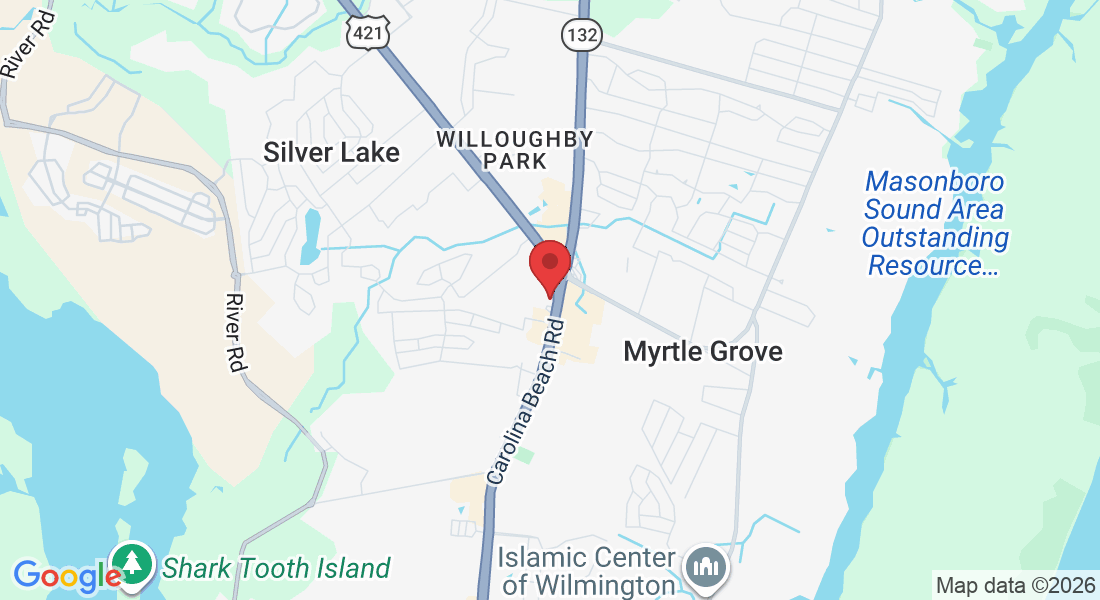
5552 Carolina Beach Rd, Ste F
Wilmington, NC 28412
Phone: (910)-395-5664
Operating Hours
Monday - 8 AM–12 PM
2–6 PM
Tuesday - 8 AM–12 PM
2–6 PM
Wednesday - 8 AM–12 PM
2–6 PM
Thursday - 8 AM–12 PM
2–6 PM
Friday - Closed
Saturday - Closed
Sunday - Closed


