
Myrtle Grove Chiropractic & Acupuncture Center
Book Now
What is Dry Needling and Does It Actually Work? A Chiropractor's Perspective
Introduction
You've heard about dry needling. Maybe a friend raved about it. Maybe you saw it on social media. But you're confused: Is it the same as acupuncture? Does it actually work? Is it safe?
These are good questions. Dry needling is relatively new in the United States (though it's been used internationally for decades), so confusion is understandable.
In this guide, we'll explain exactly what dry needling is, how it differs from acupuncture, what the science says about its effectiveness, and why athletes and active people in Wilmington, NC are turning to this therapy for pain relief and faster recovery.
By the end, you'll know whether dry needling is right for you.
What is Dry Needling? The Basics
Dry needling is a technique where a thin needle is inserted directly into a muscle to release tension and trigger healing.
The word "dry" is important—there's no medication or saline injected. Just the needle itself.
How Dry Needling Works
When you have tight muscles, they develop trigger points—small areas of extreme tension within the muscle fiber. These trigger points:
Cause local pain
Refer pain to other areas (a tight muscle in your lower back might cause pain in your hip)
Limit movement
Slow recovery from injuries
A dry needle inserted into a trigger point causes a local twitch response—the muscle contracts involuntarily. This contraction:
Releases the trigger point
Flushes out inflammatory chemicals
Stimulates blood flow to the area
Triggers your nervous system to "reset" the muscle
The result: Immediate or near-immediate pain relief and restored movement.
What It Feels Like
Contrary to what you might expect, dry needling isn't painful.
When the needle first enters, you feel a slight pinch. Then, as it reaches the trigger point, you feel a dull ache or mild cramping sensation—similar to a muscle cramp. This sensation lasts only a few seconds and is actually a sign the technique is working.
Most patients find it tolerable and even relaxing.
Dry Needling vs. Acupuncture: Are They the Same?
Short answer: No. They're different techniques with different philosophies.
People confuse them constantly, so let's clear it up.
Philosophical Differences
Acupuncture is based on Traditional Chinese Medicine theory. It targets specific points (called acupoints) believed to balance "qi" (energy) flow through meridians in your body.
Dry needling is based on Western anatomy and neurophysiology. It targets specific trigger points in muscles based on where tension exists and where pain is occurring.
Anatomical Differences
Acupuncture points are based on traditional meridian maps that may or may not align with modern anatomy.
Dry needling trigger points are based on muscle anatomy. Your practitioner can palpate (feel) the trigger point with their fingers before needling it.
Needle Technique Differences
Acupuncture needles are usually left in place for 20-30 minutes while you relax.
Dry needling often involves moving the needle in and out repeatedly to trigger multiple contractions (called pistol-grip technique), or it can involve leaving the needle in place for a few minutes.
Point Selection Differences
Acupuncture uses standardized point locations (LI4, ST36, etc.) that are the same for all patients with similar conditions.
Dry needling is individualized. Your practitioner assesses YOUR specific tight muscles and trigger points, then needles those specific areas.
Evidence Comparison
Acupuncture has good evidence for certain conditions (chronic pain, nausea) but is less effective for acute muscle tension.
Dry needling has strong evidence for muscle-related pain and trigger point release. Research shows it works as well as physical therapy for many conditions—and often works faster.
Can You Do Both?
Yes. Many practitioners combine acupuncture and dry needling in a single session. For example:
Use dry needling to release trigger points (immediate relief)
Use acupuncture points to reduce inflammation and support healing
Result: Faster, more comprehensive relief
What Conditions Does Dry Needling Treat?
Dry needling is effective for muscle-related pain and tension. Here are the most common conditions:
Myofascial Pain Syndrome
This is chronic muscle pain caused by trigger points. Muscles develop tight knots that refer pain to other areas. Dry needling is specifically designed to treat this.
Sports Injuries
Athletes use dry needling to accelerate recovery from strains, sprains, and overuse injuries. It reduces pain and restores movement faster than rest alone.
Common sports injuries treated:
Hamstring strains
Rotator cuff strains
Plantar fasciitis
Achilles tendinitis
Muscle soreness after intense training
Tension Headaches
Tight neck and shoulder muscles often cause tension headaches. Needling the trigger points in these muscles can eliminate headaches entirely.
Lower Back Pain
Tight muscles in your lower back, glutes, and hip flexors cause most lower back pain. Dry needling releases these muscles and often provides immediate relief.
Neck Pain and Stiffness
Whether from poor posture, whiplash, or muscle tension, tight neck muscles respond well to dry needling.
Knee Pain
Tight quadriceps and hamstring muscles contribute to knee pain. Needling these muscles often eliminates knee pain without addressing the knee joint itself.
Shoulder Pain
Tight rotator cuff muscles and upper back muscles cause most shoulder pain. Dry needling releases these muscles and restores pain-free movement.
The Science: Does Dry Needling Actually Work?
Yes. Research shows dry needling is effective for muscle pain and trigger points.
What Research Shows
Pain reduction: Multiple studies show dry needling reduces pain as effectively as other treatments (manual therapy, stretching, exercise) but often works faster.
Range of motion: Patients regain movement after dry needling, sometimes immediately.
Function: Athletes return to training and competition faster with dry needling than with traditional physical therapy alone.
Durability: Relief from dry needling lasts. It's not temporary pain masking—it actually changes the muscle.
Why It Works
The mechanism is clear:
Needle enters muscle fiber
Triggers local twitch response
Twitch releases tension in the muscle
Inflammatory chemicals are flushed out
Blood flow increases
Nervous system "resets" the muscle
Pain is gone, movement is restored
This isn't theory—it's observable physiology.
Dry Needling vs. Other Treatments
Dry Needling vs. Stretching
Stretching can help muscle tension, but it doesn't release trigger points. A hyper-tense muscle won't stretch properly—it will just stay tight.
Dry needling releases the trigger point first, then stretching becomes effective.
Winner: Dry needling works faster. Stretching is supportive.
Dry Needling vs. Massage
Massage can release tight muscles over time, but it's slow and requires deep pressure.
Dry needling releases trigger points in seconds with minimal discomfort.
Winner: Dry needling is faster and more effective for trigger points. Massage is good for general relaxation.
Dry Needling vs. Physical Therapy
Physical therapy uses exercise and movement to strengthen muscles and restore function. It's important for long-term prevention.
Dry needling releases trigger points quickly so physical therapy becomes more effective.
Best approach: Dry needling first (fast relief), then physical therapy (long-term strength).
Dry Needling vs. Pain Medication
Pain medication masks symptoms but doesn't fix the problem. When the medication wears off, pain returns.
Dry needling fixes the problem (releases the trigger point). Pain relief is lasting.
Winner: Dry needling. No side effects, lasting relief, addresses the cause.
What to Expect During Dry Needling Treatment
Before Treatment
Your practitioner will assess your pain, movement, and muscle tension. They'll palpate (feel) your muscles to locate trigger points.
During Treatment
Positioning — You'll be positioned so the affected muscle is accessible and relaxed.
Needle insertion — The practitioner inserts a thin needle directly into the trigger point. You feel a slight pinch as the skin is penetrated, then a dull ache as the needle reaches the trigger point.
Trigger point release — The practitioner may move the needle in and out (pistol-grip) or leave it in place. You'll feel muscle twitches—this is the trigger point releasing.
Duration — Treatment usually takes 5-15 minutes depending on how many trigger points are being treated.
After Treatment
You might feel:
Immediate pain relief (common)
Mild soreness for 24-48 hours (similar to post-exercise soreness, completely normal)
Restored movement and flexibility
Improved sleep that night
Treatment Schedule
For acute muscle pain: 1-3 sessions often provides significant relief.
For chronic trigger points: 4-6 sessions might be needed for complete resolution.
Most people return weekly until symptoms resolve, then discontinue.
Is Dry Needling Safe?
Yes. Dry needling is very safe when performed by a trained practitioner.
Contraindications (When NOT to Use Dry Needling)
Pregnancy (some areas should be avoided)
Blood clotting disorders or blood thinners
Severe needle phobia
Immunocompromised patients (relative contraindication)
Side Effects
Dry needling has minimal side effects:
Muscle soreness (24-48 hours, mild)
Light bruising (rare, resolves in days)
Temporary fatigue (very rare)
Serious side effects (infection, nerve damage, pneumothorax) are extremely rare when performed by trained practitioners.
Safety Standards
In Wilmington, NC, dry needling is performed by:
Licensed chiropractors with dry needling certification
Licensed physical therapists with dry needling certification
Licensed acupuncturists
All practitioners use sterile, single-use needles and follow strict safety protocols.
Dry Needling Combined with Chiropractic Care
At Myrtle Grove Chiropractic, we often combine dry needling with chiropractic adjustments for comprehensive pain relief.
Why Combine Them?
Chiropractic adjustments restore spinal alignment and reduce nerve irritation.
Dry needling releases muscle tension that caused the misalignment.
Together, they address both the structural problem (misalignment) and the muscular problem (tension).
Example: Lower Back Pain
Assessment — We find that your lower back is misaligned AND your lower back muscles are hyper-tense with trigger points.
Dry needling — We release the trigger points in your lower back and glutes. Immediate pain relief and improved movement.
Chiropractic adjustment — We adjust your spine to restore proper alignment. This prevents the muscles from tightening again.
Result — Long-lasting relief because we fixed both problems.
Who Benefits Most from Dry Needling?
Athletes
If you're active and have muscle pain, dry needling can get you back to training faster than rest alone.
People with Chronic Muscle Pain
If you've had trigger points for months or years, dry needling offers relief when other treatments haven't worked.
People Who Don't Respond to Stretching
If stretching and massage haven't helped, dry needling might release the trigger point that's resistant to other methods.
Anyone Seeking Fast Relief
If you need pain relief quickly (not slowly over weeks), dry needling works fast.
Ready to Try Dry Needling?
If muscle pain or trigger points are limiting your life, dry needling might be the solution you've been looking for.
At Myrtle Grove Chiropractic in Wilmington, NC, we combine dry needling with chiropractic care for comprehensive relief. Many patients feel better after just one session.
Ready to experience fast relief? Schedule your evaluation today.
Call (910) 395-5664 or click below to book your appointment.
Ready for Fast Muscle Pain Relief?
Don't let muscle tension and trigger points limit your activities. Dry needling at Myrtle Grove Chiropractic provides fast, lasting relief.Call: (910) 395-5664 | Hours: Monday-Thursday, 8am-5pm
Related Articles
Learn more about pain relief and recovery:
Frequently Asked Questions
Myrtle Grove Chiropractic & Acupuncture Center | Wilmington, NC
Got a question? You're not alone. Here are the most common questions we hear from patients in Wilmington and surrounding areas. Can't find your answer? Contact us at 5552 Carolina Beach Rd, Ste F, Wilmington, NC 28412.
Will you pressure me into long-term plans?
No. A good chiropractor recommends care based on your progress and goals, not sales quotas. You’ll never be pushed into prepaid packages.
Do you guarantee results?
No ethical provider guarantees outcomes. Instead, we give honest expectations and focus on steady, realistic improvement.
Will you explain what’s going on with my body?
Yes. You’ll receive clear explanations about your condition, treatment options, and what results you can expect.
Is my care personalized?
Yes. Every treatment plan is tailored to your health history, lifestyle, and specific concerns.
Do you do an exam before treatment?
Yes. We begin with a thorough assessment, health history, and appropriate testing before any adjustments.
Are you properly licensed?
Yes. Our credentials and licensure are current, transparent, and verifiable through the state board.
How do you know when I’m ready to reduce visits?
We base frequency on your progress, stability, and goals—not on contracts. Our goal is independence, not dependence.
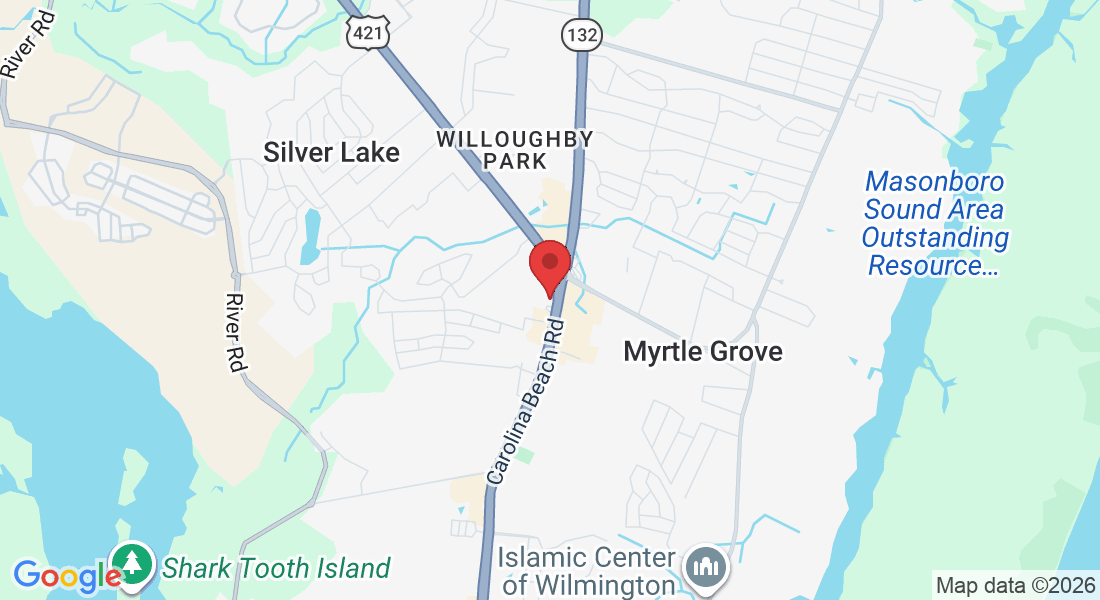
5552 Carolina Beach Rd, Ste F
Wilmington, NC 28412
Phone: (910)-395-5664
Operating Hours
Monday - 8 AM–12 PM
2–6 PM
Tuesday - 8 AM–12 PM
2–6 PM
Wednesday - 8 AM–12 PM
2–6 PM
Thursday - 8 AM–12 PM
2–6 PM
Friday - Closed
Saturday - Closed
Sunday - Closed


Copyright ©️ 2026 Black Sheep Media LLC