
Acupuncture for Stress and Anxiety: How It Works & What Research Shows
Introduction
Your nervous system is stuck in overdrive.
You're constantly stressed. Your shoulders are perpetually tense. You can't sleep. Your mind races at night. You've tried meditation, exercise, therapy—and nothing fully works.
Then someone suggests acupuncture. You're skeptical. Needles in your skin to reduce stress? How does that even work?
Here's the truth: Acupuncture is one of the most effective treatments for stress and anxiety. And the science backs it up.
In this guide, we'll explain exactly how acupuncture calms your nervous system, what research shows about its effectiveness, and why more people in Wilmington, NC are turning to acupuncture instead of anxiety medication.
By the end, you'll understand why this ancient practice is so powerful for modern stress.
How Stress Affects Your Body
Before we talk about acupuncture, let's understand what stress actually does to you.
The Fight-or-Flight Response
When you perceive a threat (real or imagined), your nervous system activates your sympathetic nervous system—the "fight or flight" response.
Your body releases:
Adrenaline — increases heart rate and blood pressure
Cortisol — suppresses immune function and increases inflammation
Norepinephrine — increases alertness and anxiety
This response is designed for physical threats (a predator attacking you). It was useful for our ancestors. But modern stress isn't physical—it's financial, relational, professional.
The problem: Your body can't distinguish between a real threat and an imagined one. Your nervous system activates the same way whether you're facing a tiger or worrying about a deadline.
What Chronic Stress Does
When stress becomes chronic, your sympathetic nervous system stays activated. Your body constantly produces cortisol and adrenaline.
The results:
Muscle tension (especially neck, shoulders, jaw)
Disrupted sleep
Weakened immune system
Digestive problems
Anxiety and depression
Increased inflammation
Difficulty concentrating
You're essentially living in a permanent state of alert, which is exhausting and harmful.
How Acupuncture Works on Your Nervous System
Acupuncture doesn't just make you feel relaxed. It physically changes how your nervous system functions.
Activating Your Parasympathetic Nervous System
Your parasympathetic nervous system is your "rest and digest" system. It's the opposite of fight-or-flight. When your parasympathetic system is active:
Your heart rate slows
Blood pressure decreases
Digestion improves
Immune function strengthens
Anxiety decreases
Sleep improves
Acupuncture activates your parasympathetic nervous system.
Specifically, acupuncture stimulates the vagus nerve—the main nerve of your parasympathetic system. When stimulated, the vagus nerve sends signals to your brain that say "you're safe now, relax."
Releasing Endorphins
Acupuncture stimulates your body to release endorphins—natural pain-relieving and mood-elevating chemicals. These are your body's own "happy drugs."
Endorphins:
Reduce pain perception
Elevate mood
Decrease anxiety
Improve sleep quality
Enhance overall sense of well-being
Reducing Inflammatory Signals
Chronic stress increases inflammation throughout your body. Acupuncture reduces inflammatory markers in your blood, which decreases both physical and mental symptoms of stress.
Rebalancing Neurotransmitters
Stress depletes neurotransmitters like serotonin, dopamine, and GABA—the chemicals that regulate mood and anxiety.
Acupuncture helps your body produce more of these neurotransmitters, which naturally reduces anxiety without the side effects of medication.
The Science: What Research Shows
Acupuncture for stress and anxiety has strong scientific support.
Clinical Studies Show Real Results
Generalized Anxiety Disorder: Studies show acupuncture is as effective as pharmaceutical anxiety medication—but without side effects like dependency or weight gain.
Stress Response: Brain imaging shows that acupuncture literally changes how your brain responds to stress. Your amygdala (fear center) becomes less reactive.
Sleep Quality: 70% of patients receiving acupuncture for stress report significant improvement in sleep within 3-4 sessions.
Cortisol Levels: Research shows acupuncture reduces cortisol (stress hormone) levels, sometimes within hours of treatment.
Why It Works Better Than Medication for Some People
Medication side effects:
Weight gain or loss
Sexual dysfunction
Emotional numbness
Dependency risk
Takes weeks to work
Acupuncture benefits:
No side effects
Works within hours
Addresses root cause (nervous system imbalance)
No dependency
Improves overall health
Common Conditions Treated with Acupuncture
Generalized Anxiety Disorder
Constant low-level worry about everything. Your mind won't turn off. Acupuncture calms your nervous system and quiets racing thoughts.
Social Anxiety
Intense fear of social situations. Acupuncture reduces the physiological anxiety response (racing heart, sweating), making social situations manageable.
Panic Attacks
Sudden, intense fear episodes. Acupuncture reduces the frequency and severity of panic attacks by calming your nervous system.
Stress-Related Insomnia
Your mind races at night. You can't sleep despite being exhausted. Acupuncture activates your parasympathetic nervous system, allowing sleep.
Work-Related Stress
You're constantly tense, irritable, and exhausted. Acupuncture reduces the physical and emotional effects of workplace stress.
Post-Traumatic Stress Disorder (PTSD)
Acupuncture combined with other trauma therapies helps reduce hypervigilance and anxiety associated with trauma.
Depression
Often caused or worsened by stress and anxiety. Acupuncture addresses the underlying nervous system imbalance.
What to Expect During Acupuncture for Stress
Initial Consultation
Your acupuncturist will ask detailed questions about your stress, anxiety, sleep, digestion, and overall health. They're looking for patterns.
They'll assess your pulse and examine your tongue (these indicate nervous system state in Traditional Chinese Medicine).
During Treatment
Positioning — You'll lie on a comfortable table in a relaxing environment. Soft lighting, calming music.
Needle placement — Your acupuncturist inserts very thin needles at specific points. Common points for stress are on your wrists, legs, and ears.
Sensation — You feel a slight pinch as the needle enters, then a dull, warm sensation. Many patients find this deeply relaxing.
Rest period — Needles remain in place for 20-30 minutes while you rest. Many people fall asleep.
Removal — Needles are removed, and you feel deeply relaxed.
After Treatment
You'll likely feel:
Deep relaxation
Mental clarity
Improved mood
Better sleep that night
Reduced muscle tension
Treatment Timeline: When Will You Feel Better?
First Session
Many people feel relaxed immediately after their first session. Some notice better sleep that night.
Sessions 2-4
Most people notice significant reduction in anxiety within 3-4 sessions. Racing thoughts slow down. Muscle tension decreases.
Sessions 5-8
For chronic anxiety, 6-8 sessions usually brings substantial relief. Many patients reduce or eliminate anxiety medication (under doctor supervision) at this point.
Long-Term Results
Monthly maintenance sessions keep anxiety at bay. Some patients need only 1-2 sessions per month once they reach their goal.
Why Stress Matters (And Why You Should Address It)
Chronic stress doesn't just feel bad—it damages your health.
Stress increases risk of:
Heart disease
Stroke
Weakened immune system
Autoimmune diseases
Digestive disorders
Sleep disorders
Depression and anxiety
Memory problems
Addressing stress with acupuncture prevents these conditions.
This makes acupuncture not just a comfort treatment—it's preventive medicine.
How Acupuncture Fits Into Your Stress Management Plan
Acupuncture works best as part of a comprehensive stress management plan:
Acupuncture (physical/nervous system)
Meditation/mindfulness (mental training)
Exercise (physical outlet)
Therapy (emotional processing)
Good sleep (recovery)
Healthy diet (cellular support)
= Real, lasting stress relief
Acupuncture isn't a complete solution alone, but it's often the piece that makes everything else work better.
Acupuncture at Myrtle Grove Chiropractic in Wilmington, NC
At Myrtle Grove Chiropractic, we combine acupuncture with chiropractic care for comprehensive stress relief.
Here's why this works:
Chiropractic adjustments restore spinal alignment and reduce nerve irritation (stress manifests as muscle tension and spinal misalignment).
Acupuncture calms your nervous system and reduces anxiety at the neurological level.
Together, they address stress from multiple angles.
Ready to Calm Your Nervous System?
If stress and anxiety are affecting your health and quality of life, acupuncture offers real relief—without medication side effects.
At Myrtle Grove Chiropractic in Wilmington, NC, we've helped hundreds of people reduce anxiety and reclaim their calm.
Ready to experience deep relaxation and reduced anxiety? Schedule your acupuncture consultation today.
Call (910) 395-5664 or click below to book your appointment.
Ready to Reduce Stress and Anxiety?
Don't let stress control your life. Acupuncture at Myrtle Grove Chiropractic provides natural, lasting relief from anxiety and stress.
[Schedule Your Acupuncture Consultation Now]
Call: (910) 395-5664 | Hours: Monday-Thursday, 8am-5pm
Related Articles
Learn more about stress management and wellness:

Frequently Asked Questions
Myrtle Grove Chiropractic & Acupuncture Center | Wilmington, NC
Got a question? You're not alone. Here are the most common questions we hear from patients in Wilmington and surrounding areas. Can't find your answer? Contact us at 5552 Carolina Beach Rd, Ste F, Wilmington, NC 28412.
Will you pressure me into long-term plans?
No. A good chiropractor recommends care based on your progress and goals, not sales quotas. You’ll never be pushed into prepaid packages.
Do you guarantee results?
No ethical provider guarantees outcomes. Instead, we give honest expectations and focus on steady, realistic improvement.
Will you explain what’s going on with my body?
Yes. You’ll receive clear explanations about your condition, treatment options, and what results you can expect.
Is my care personalized?
Yes. Every treatment plan is tailored to your health history, lifestyle, and specific concerns.
Do you do an exam before treatment?
Yes. We begin with a thorough assessment, health history, and appropriate testing before any adjustments.
Are you properly licensed?
Yes. Our credentials and licensure are current, transparent, and verifiable through the state board.
How do you know when I’m ready to reduce visits?
We base frequency on your progress, stability, and goals—not on contracts. Our goal is independence, not dependence.
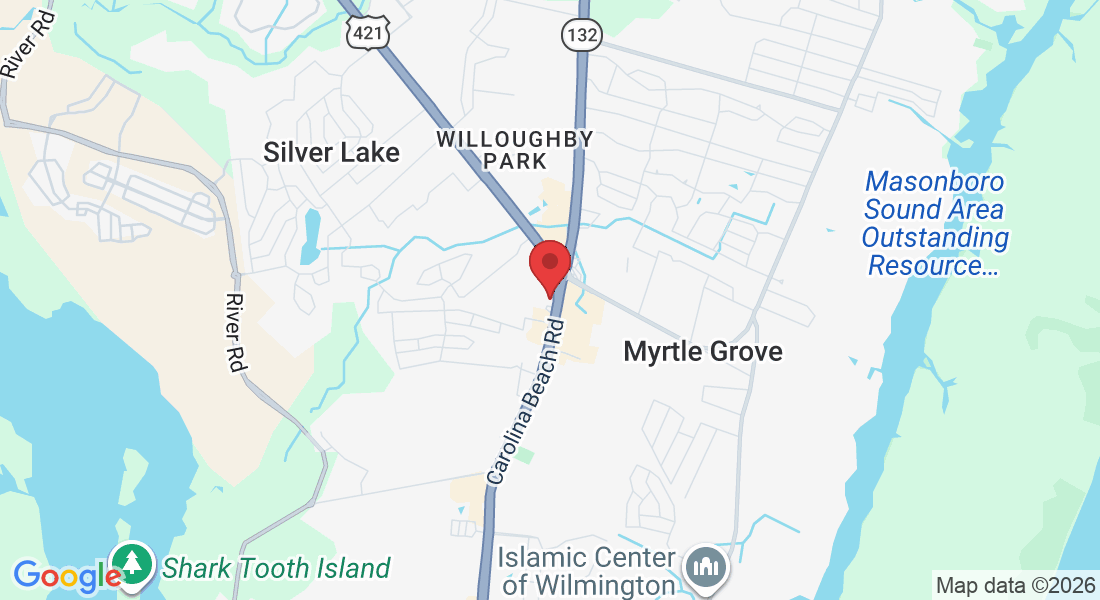
5552 Carolina Beach Rd, Ste F
Wilmington, NC 28412
Phone: (910)-395-5664
Operating Hours
Monday - 8 AM–12 PM
2–6 PM
Tuesday - 8 AM–12 PM
2–6 PM
Wednesday - 8 AM–12 PM
2–6 PM
Thursday - 8 AM–12 PM
2–6 PM
Friday - Closed
Saturday - Closed
Sunday - Closed


